This post was earlier cross-posted at Leonid Schneider's site, hence the unfrivolous tone. The version there is improved by Leonid's editing and frame-story. And some out-takes.
It turned out that an Indian journalist had been pursuing a similar story, looking at the research output of the CSIR-IITR as a whole (rather than just a single scientist there), and more generally at the broader CSIR. He was prompted to publish his own critical conclusions, citing Leonid's site for support. His story and its successors were picked up by other journalists;  the institutions have promised top-level inquiries into academic standards among their researchers, and a lot of people have suddenly begun to to engage with questions at PubPeer rather than ignoring the critiques as below their dignity. Also, Paris, Rome, Munich and New York are burning.
These mice were treated for cancer in 2014, using nano-encapsulated pineapple-squeezed bromelain (VII and VIII are identical twins) [1].
Not only was the treatment successful, but it prolonged their lives long past the usual murine span so they could be treated for cancer
again in 2018, this time using nano-encapsulated barberry squeezings [2].
Some uncertainly lingered whether the nano-encapsulation involved "Hyaluronic acid-grafted PLGA" or "
O-Hexadecyl-Dextran" [3].
The history of "medicinal pineapple" is in fact
an interest of mine (I suspect it may be inspired by the verbal resonance between
Ananas and Ananias, the patron saint of liars). It began with
a German charlatan who reasoned that Bromelain is a meat-softening enzyme, and tumours are
made of meat. Anyway, our rodent friends provide a convenient entry point to the cuisine-based corpus of Professor Yogeshwer Shukla at CSIR-Indian Institute of Toxicology Research (Delhi, India). For with the help of his colleagues and students, Dr Shukla has reported diverse botanical treatments for cancer (in mice!) in the course of his illustrious career... with squeezings from garlic, pomegranates, and mangos as well as pineapples. Also grape-skins and tea-leaves; and extracts from cinnamon, ginger and turmeric. Sometimes in isolation, sometimes in synergistic combination. It is as if an unlikely concatenation of events had led to the acceptance of a
nouvelle-cuisine cookbook as a grant proposal.
As is the custom of my people, I shall draw heavily on comments left at the 'PubPeer' website, where
40 threads are currently devoted to discussing specific papers from his
oeuvre.
Some of those papers have been retracted, but surprisingly few in light of the unabashed data frauds they display. I can promise a promenade of hedgehogs, in illustration of Clyde's First Law ("Everything is better with googly eyes") [4].
But gratification deferred is gratification doubled, and to heighten the dramatic tension I'll begin with a peripheral figure:
Sahdeo Prasad. The
PubPeer archives for Prasad show him participating in much of the output from Shukla's output -- perhaps as a grad or post-grad student -- around 2007-2009, a notably productive period for the laboratory. After that he ascended to the MD Anderson Cancer Center (University of Texas) to work with Bharat Aggarwal and co-author a string of papers,
later retracted because the amount of fabrication in them exceeded editorial tolerance. Prasad now collaborates with the
mendacious scoundrels at OMICS, and also edits journal-shaped dumpsters for
Longdom Publishing (an OMICS polyp).
Now
Aggarwal's name should be familiar. He was a pioneer in the field of 'Jurisprudential Science', which is where you prove the validity of your theories and results by issuing
bumptious, censorious legal threats against your critics. If
Jurisprudential Science is not yet the title of a parasitical journal from OMICS, it should be. Disgrace as a con-man and departure from the MD Anderson did not greatly discommode Aggarwal's career. He continued to
publish in Frontiers journals (aided by the complaisance of his quondam colleagues as editors and reviewers), and to star as a guest speaker at magical-thinking scamborees on "curing cancer with culturally-significant herbs and spices".
Many of the Prasad / Aggarwal impostures emerged from a research goal of finding curative benefits from turmeric (more exactly, from the dyestuff / secondary metabolite
curcumin extracted from turmeric), obliging them to fake results because in practice curcumin is a shite drug. Aggarwal also played a role in in the Red-Wine bubble... I do not mean the beaded bubbles winking at the brim of a beaker of blushful Hippocrene, but rather, the swell of enthusiasm for the grape-skin component
resveratrol which was going to lengthen lifetimes and cure heart disease and cancer by drinking red wine until people collectively tired of faking positive results.
The relevance of this little digression is that Yogeshwer Shukla espouses the same "culturally-significant plant product" ethnocentric-pharmacognosy approach to drug development, attempting to bring his artistic practice under the protective aegis of
Ayurveda (like Aggarwal, he plays up the medieval-herbalism aspect of the Ayurvedic scammocopoeia and plays down the
arsenic / mercury / lead toxic-metal alchemy). It must be tempting for scientists in India to claim that their work vindicates Ayurvedic Traditional Knowledge, so that as champions of Vedic cultural virtues they can call on the political forces of ethnocentric chauvinism to keep themselves dismissal-proof despite incompetence or corruption. As it happens, herbs like caraway and dill are important in
my culture, especially their secondary metabolites infused in alcohol, but I do not pretend that Akvavit botanicals are responsible for my unnaturally-extended life-span.
But back to the PubPeer archives. With so many threads, we can only scratch the surface of the iceberg on the seashore and divert ourselves in now and then finding a smoother pebble or a prettier shell than ordinary. Rest assured that curing cancer does not distract Dr Shukla entirely from the 'Toxicology' aspect of his institution, and he also studies the carcinogen side of the coin, even if he sometimes confuses Deltamethrin and Benz-α-pyrene, on one hand [5], with Cypermethrin and mezerein on the other [6].
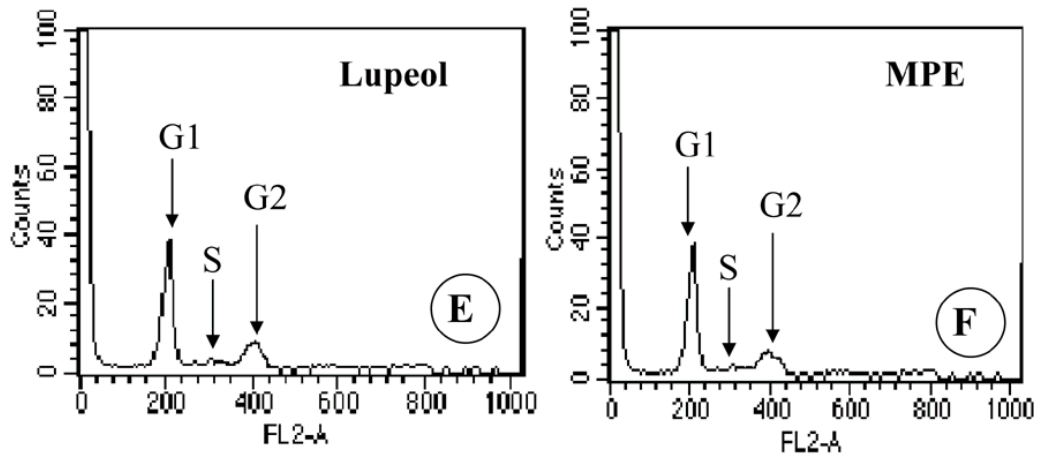
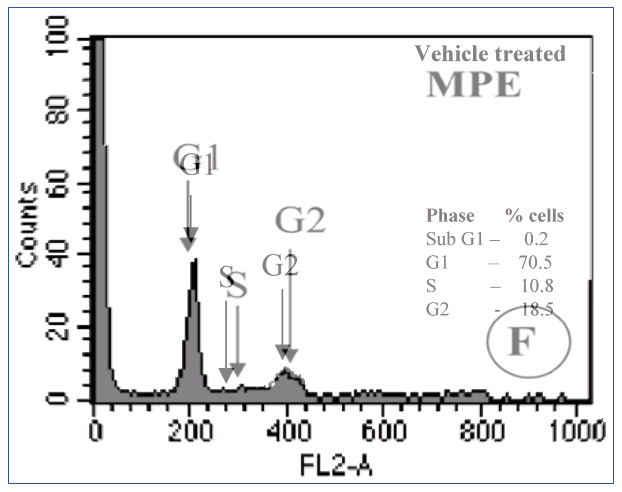
So let's start with a recent paper (2016) [7], in which the magic of mango squeezings (Lupeol) prevent a fungicide (Mancozeb) from causing cancer. Here are two panels from Figure 2. Now I am not wise in the ways of counting cells by fluorescence and graphing the results as a histogram, but I do know that histograms are supposed to be
solid. If they are undercut by erosion or the ravages of termites (marked in red), something is wrong. It is also a problem if fine details are identical in what are purportedly independent experiments (marked in blue).
The pixels which were whittled away from the left-hand panel with the Eraser tool show up as black, after black / white reversing the right-hand panel and superimposing it on the former (everything else cancels out). This is MS Paint work, not even Photoshop! This clumsy, lazy falsification is a slap in the face for honest hard-working data forgers who take pride in their workmanship.
Here are earlier examples of white-anted overhanging histograms, from Fig 4A of [8] at left, while the outlined examples at right (from Figure 2 of [9]) are riddled with glitches, like free software:


In fact these are snapshots in the process of carving cell-count histograms from scratch. They are like scenes from the creation of a sculpture or a painting, like
watching Giaocometti scraping away the clay or pigment he had added in an earlier stage in the cycle. Now [8] still centred on mango juice, while [9] focused on the cancer-preventing powers of
garlic... but an overlay of these supposedly-separate data sets shows the sections of perimeter which were
not re-worked, and leaves one to wonder if there were any original data measurements at all.
One last example before we move on. In contrast to the toppling minarets in Fig. 4A of [8], what renders 4B risible are similarities among its panels, where only a few pixels were scraped from one and added to another.
When we turn from to Figure 2 of [10], which at least still hoes the row of mango-juice cancer prevention (even though its protective powers are extended over
mouse liver cells, rather than
lymph node carcinoma of the prostate), it is not too great a surprise to encounter find cell-count plots that are outlined but superimposable.
In contrast to histogrammed cell counts, flow-cytometry plots (FACS) measure
two fluorescent indicators of each cell's status and use them as coordinates to plot each cell as a point in two dimensions. They feature prominently in this body of work. They display a recurring quality of insufficient difference. Partial replications could arise when someone took a single file of data (recorded for one experimental condition) and ran it twice through different settings of the filter parameters... but also when someone modified a plot in Paint / Photoshop.
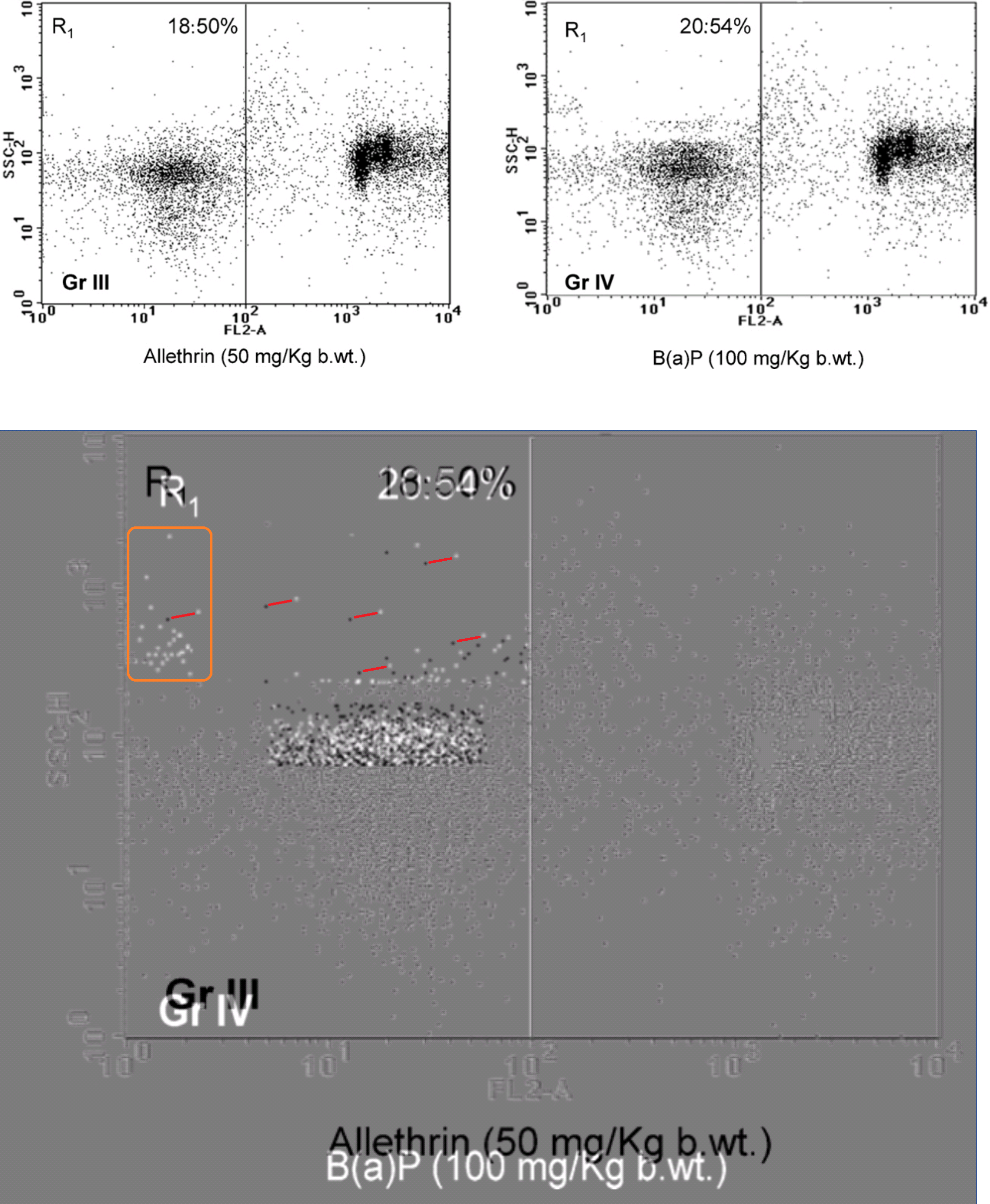
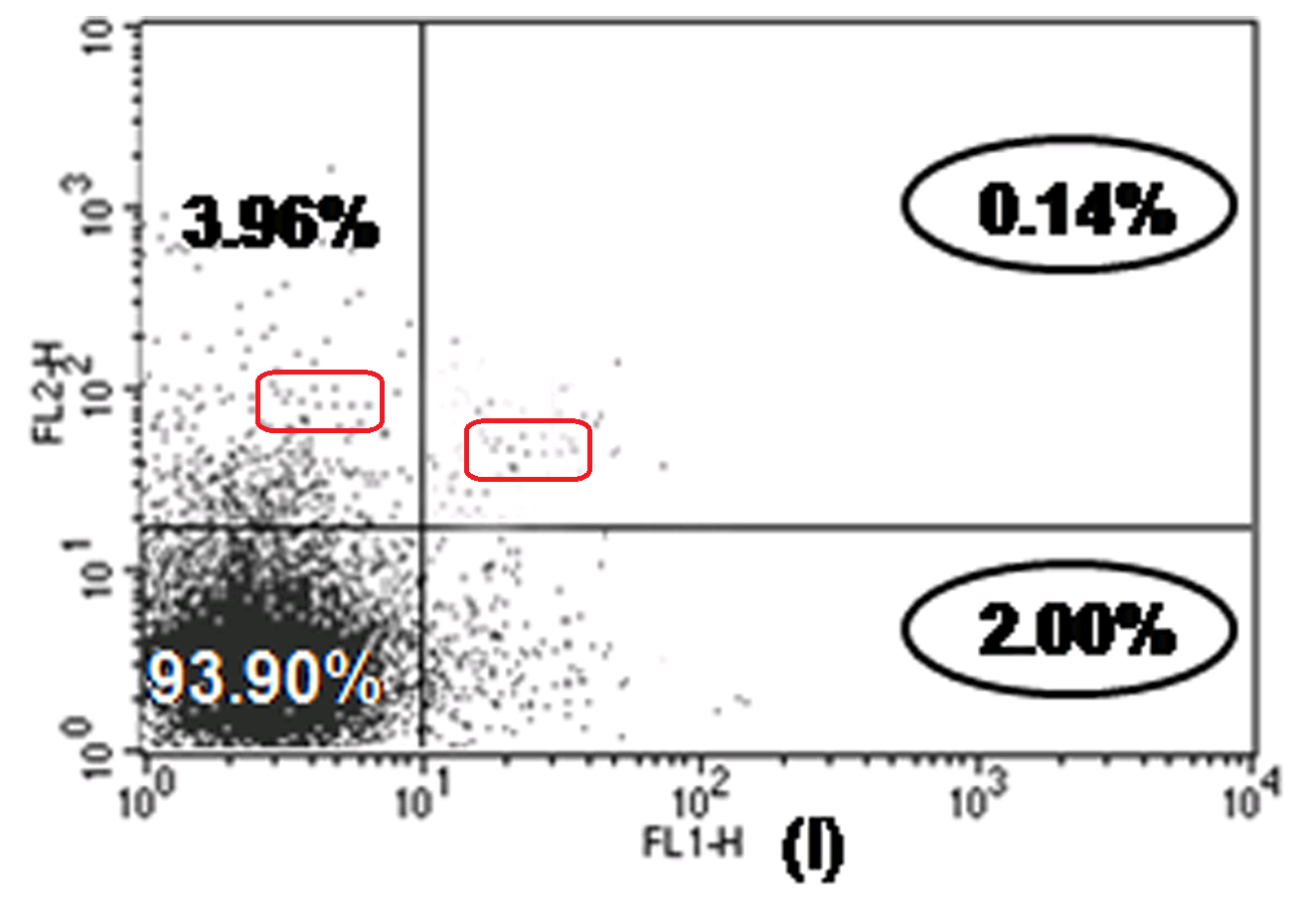
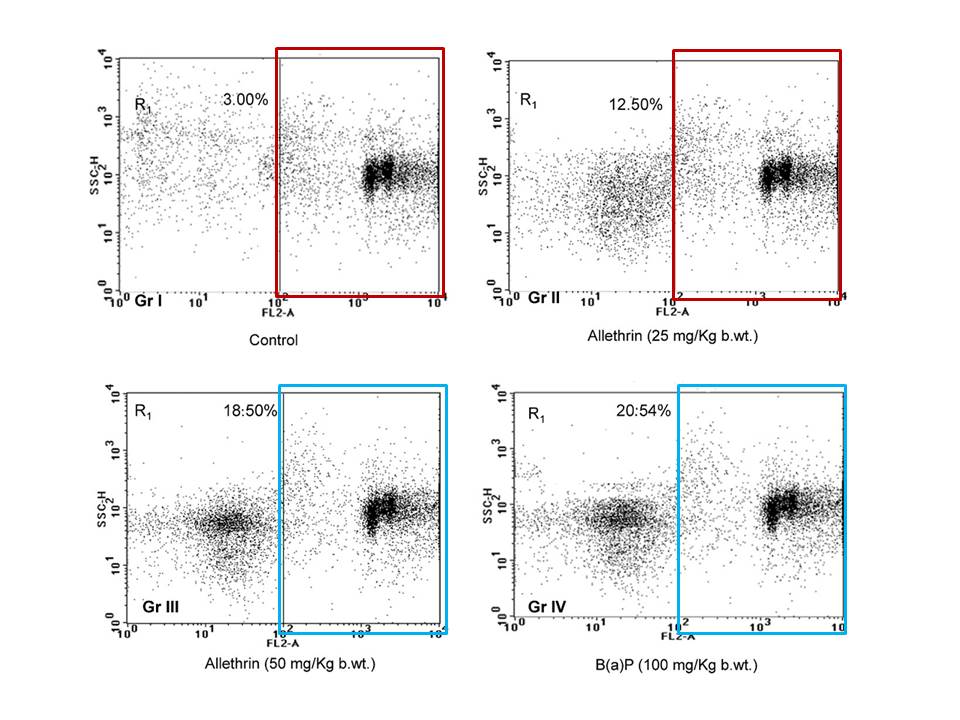
A good example is Figure 2 from a 2012 paper on the mutagenic mayhem wrought by Allethrin insecticide in the absence of mango protection. "Boeckella Robusta"
wondered "could authors explain how the same dot plots were generated for different treatments in the indicated boxes?"
Indeed, in a superimposition of the Allethrin and Benz-α-pyrene panels, cancellation is complete across three quarters of the plane. There is a patch of white points unique to B-α-P treatment; an exact rectangle of discordant cells; and a zone of black/white pairs where cells were displaced
en masse. The forger saw no need for anything sophisticated.
As for the Control panel,
res ipsa loquitur.
Paper [1] from 2014 gave us the curative nano-pineapples. As
"Notarius Cookei" noted, it also provides examples of FACS fakery. Here I choose Figures 6(G) and 6(H), and 9(F) and 9(H).


"When 99% of cells are identical in both plots, the most parsimonious explanation is that both plots
used the same data."
I skip over
other examples in my haste to reach the delirious heights of [12] and [13]. These companion papers from 2007 and 2008 fed ginger and mangos respectively through the juicer, but the authors liked the FACS plots so much that they used them in both.
Then someone customised and enhanced each version, cloning clusters of points with all the enthusiasm of a child who has just been introduced to the artistic possibilities of the potato-stamp medium. Figures
5(B) of [12] and
4(C) of [13] should be enlarged to appreciate their plenitude.


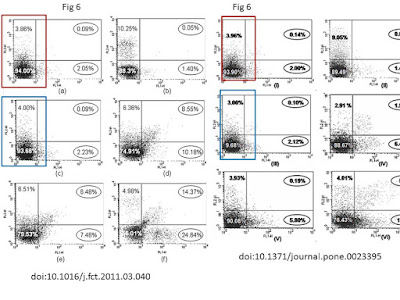
Another spurt of potato-stamp creativity occurred in 2011, in the panels of Figure 6 of [14]. The prospect of inhibiting the growth of skin tumours (in mice) with a synergistic combination of grape-skins and black tea evidently distracted the reviewers' attentions from the crystalline alignment of the FACS plots.


It also emerged that garlic and pomegranates, together, exerted exactly the same inhibition, resulting in a companion paper [15]. I do not rate for this recipe.
A lot of work went into these constructions, possibly more than simply
conducting an experiment would require, so one can understand the authors' decision to repeat them across papers. Suffice to say that the cloning tool contributed to Figure 6 of [15].


Regrettably, [14] was
retracted in April for a number of reasons (not just Figure 6). The world of science was thereby deprived of a row of hot-dogs comprising the ERK1/2 band of Figure 2.
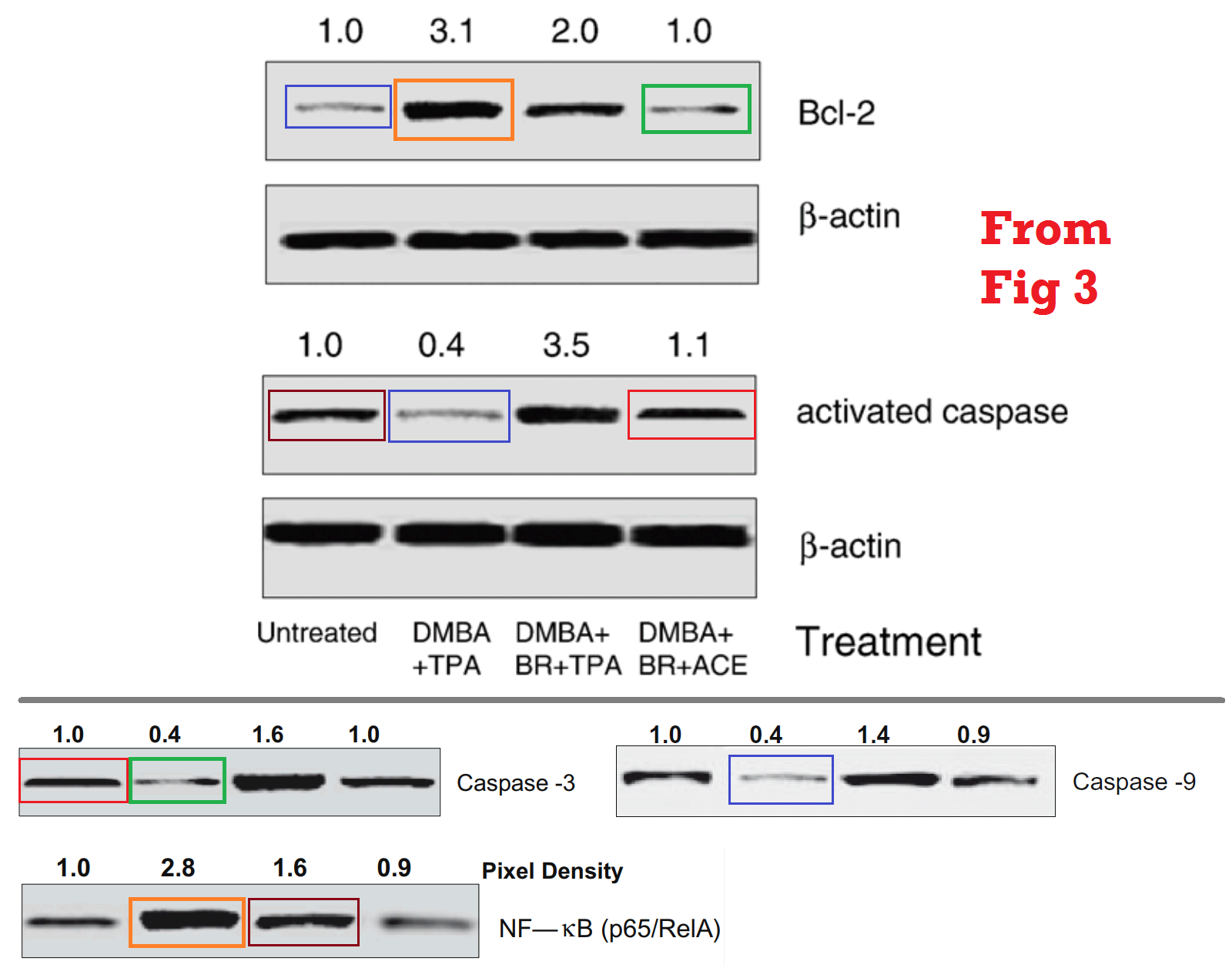
These provide a segue to the inevitable Western-blot discussion. For this body of work has its fair share of gel bands with acrobatic talents, somersaulting and stretching and reflecting as they re-identify from one Protean protein to another (and from one paper to another). Figures 3, 4 and 6 from [16]:
The next somersaults are lane-specific and require more skill. At left, Apaf 1 (from Fig 5B of [4]) becomes Cytochrome C (in Fig 3(d) of [17]). At right, p21/ras (from 2(b) of [18]) becomes AKT (in Fig 5(b) of [17])!


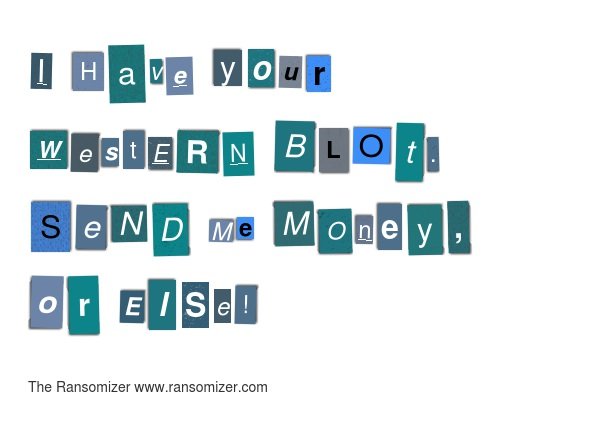
At one end of the spectrum of manipulation, blots might be repeated in successive figures with different labels, relying on the incuriosity of readers and reviewers. At the other extreme, they are cut up and reassembled like letters in a ransom note. Here from [19] to [20].


All this is for
substantive protein measurements. The normalising controls fare no better. As interest in Shukla's productions grew, '
Orophea Enterocarpa' identified a small but hard-working repertoire of loading controls. The 'bubble and hairline' control, for instance, first spotted in 2004 with five lanes for five experimental levels of
garlic [21], has at least
nine eleven recorded sightings, sometimes cut down to four lanes or extended to six with a lane duplication to match the details of the study design. These lanes corresponded to dosage of
garlic again [27],
tea [22, 24, 26],
mango / lupeol [8, 10],
grape-skins [4, 17, 23] and
pineapple [19]. In its most recent appearance (2010) it widened to an eight-lane Interstate highway.
The "scrolls" were another hard-worked loading-control panel with
five six sightings [8, 12, 17, 18, 22. 27]. Sadly, there is not space to show the "
inchworm" panel, or the "
dotted dashes", or the "
Nike Swoosh", or even the "
dashes-and-dots" in their four- and eight-lane incarnations.
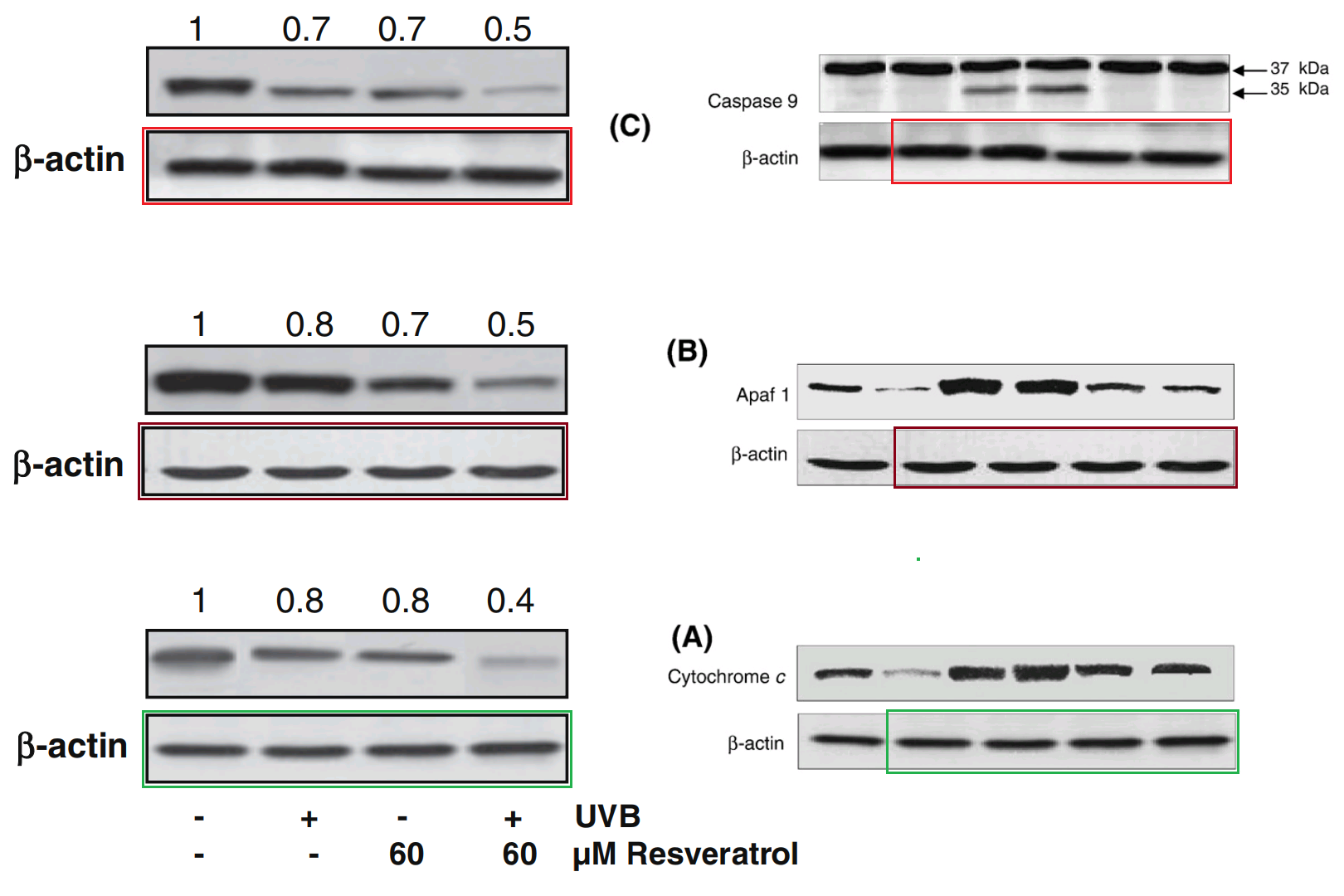
My favourite in this little genre began in 2008 as Fig 3(A) of [4], holding sway over
six variants of grape-skin therapy. It reappeared as a
four-lane version as Fig 1(B) of [20], a pineapple study (other panels of 1(B)
also repay attention); and in
Fig 3 of [19]. Pay attention to the third (or first) lane: for greater standardisation, it was quadruplicated in another 2009 loading control [23].
While back where we started, [4] also starred Fig 6(B), the "hedgehog promenade". This proves to be
another version of that single lane lane from 3(A), now multiplied
six-fold and stretched vertically.
Admittedly, not everyone agrees on the necessity for dose-equalising controls. Between publication of [4] in 2008 and
an amendment in 2016, it had featured Figs 3(B) and 5, in which
five-lane letterbox panels of β-actin sufficed to normalise a series of
six-lane blots of interest. Either the readers and reviewers and editors couldn't count or they didn't care.
Recall the point of compass-coded blotting methods: to quantify the protein expression within cells under specific conditions, by a circuitous but precise route (extracting cell contents and separating the proteins by racing them along an electrophoresis-gel racetrack or Proteodrome, then labelling them with antibodies so as to measure total antibody density). Now it is always possible that researchers
did measure all the numbers they tabulate and analyse, producing blots in the process with which they could have illustrated their reports, and they only decide to
fabricate the illustrations (or repurpose old ones) because of the artistic challenge.
After all this, there is a sense of relief to be had from meeting plain microphotographs of vat-grown tumour cells from the A549 cell-line, rendered fluorescent by different treatment with black tea polyphenols [
16]. Or perhaps they hailed from the HeLa and SiHa cell-lines [
25].
I had originally hoped to show some Northern blots of
RNA expression (
Caspase-3 becomes iκBα); or perhaps some DNA fragmentation assays, which display a
lapidary,
mosaic nature when closely examined. But this report is long enough. I must be content with this loading control from [19], which reminds me (when the lightness is turned up) of a row of
caddis-fly larvae.


Now I am not alleging retouching or Photoshop manipulations, but there are two images of Dr Yogeshwer Shukla on the Intertubes. The version shown
on his staff page at the
CSIR-Indian Institute of Toxicology Research website has changed a lot from the version on his
ResearchGate account.


If this is the effect of pineapple or mango or grape-skin treatment, he is his own best advertisement for his discoveries.
[1] "Anti-Cancer Activity of Bromelain Nanoparticles by Oral Administration"
Journal of Biomedical Nanotechnology (2014)
Priyanka Bhatnagar, Soma Patnaik, Amit K. Srivastava, Mohan K. R. Mudiam, Yogeshwer Shukla, Amulya K. Panda, Aditya B. Pant, Pradeep Kumar, Kailash C. Gupta
https://pubpeer.com/publications/D7569FE3179E5C77F10CD7D0CAFF1C
[2] "Hyaluronic acid-grafted PLGA nanoparticles for the sustained delivery of berberine chloride for an efficient suppression of Ehrlich ascites tumors"
Drug Delivery and Translational Research (2018)
Priyanka Bhatnagar, Manisha Kumari, Richa Pahuja, A. B. Pant, Y. Shukla, Pradeep Kumar, K. C. Gupta
https://pubpeer.com/publications/17D26A485788CD2B46B52781D8DD50
[3] O-hexadecyl-dextran entrapped berberine nanoparticles abrogate high glucose stress induced apoptosis in primary rat hepatocytes"
PLoS ONE (2014)
Radhika Kapoor, Shruti Singh, Madhulika Tripathi, Priyanka Bhatnagar, Poonam Kakkar, Kailash Chand Gupta
https://pubpeer.com/publications/012D4D634C827AE2183864F22FD1A0
[4] "Resveratrol induces apoptosis involving mitochondrial pathways in mouse skin tumorigenesis". Life Sciences (2008).
Neetu Kalra, Preeti Roy, Sahdeo Prasad, Yogeshwer Shukla
https://pubpeer.com/publications/4197501DBC472982247DE0AFA234E3
[5] "Early changes in proteome levels upon acute deltamethrin exposure in mammalian skin system associated with its neoplastic transformation potential"
Journal of Toxicological Sciences (2013)
Jasmine George, Yogeshwer Shukla
https://pubpeer.com/publications/F65D2C5FFC638303800927B2E28661
[6] "Cypermethrin exposure leads to regulation of proteins expression involved in neoplastic transformation in mouse skin".
Proteomics (2011).
Jasmine George, Amit Kumar Srivastava, Richa Singh, Yogeshwer Shukla
https://pubpeer.com/publications/A384A6D53974AF627FC83477C2D43E
[7] "Protective effects of lupeol against mancozeb-induced genotoxicity in cultured human lymphocytes". Phytomedicine (2016).
Amit Kumar Srivastava, Sanjay Mishra, Wahid Ali, Yogeshwer Shukla
https://pubpeer.com/publications/5AA6712082CCC91EEE90C4C5196BFE
[8] "Induction of apoptosis by lupeol and mango extract in mouse prostate and LNCaP cells".
Nutrition & Cancer (2007).
Sahdeo Prasad, Neetu Kalra, Yogeshwer Shukla
https://pubpeer.com/publications/5316531EB262091B243859A00C0137
[9] "Regulation of oxidative stress–mediated apoptosis by diallyl sulfide in DMBA-exposed Swiss mice".
Human & Experimental Toxicology (2008).
S Prasad, N Kalra, S Srivastava, Y Shukla
https://pubpeer.com/publications/92E0808D22F88CCD9F6CB46ACC36A8
[10] "Hepatoprotective effects of lupeol and mango pulp extract of carcinogen induced alteration in Swiss albino mice".
Molecular Nutrition & Food Research (2007).
Sahdeo Prasad, Neetu Kalra, Yogeshwer Shukla
https://pubpeer.com/publications/76E17585B48AC0B38E498B5EC23054
[11] "Allethrin-induced genotoxicity and oxidative stress in Swiss albino mice".
Mutation Research/Fundamental and Molecular Mechanisms of Mutagenesis (2012).
Amit Kumar Srivastava, Pramod Kumar Srivastava, Abdulaziz A. Al-Khedhairy, Javed Musarrat, Yogeshwer Shukla
https://pubpeer.com/publications/3D8F9A166D74AE68A779582773B7AD
[12] "In vitro and in vivo modulation of testosterone mediated alterations in apoptosis related proteins by [6]-gingerol".
Molecular Nutrition & Food Research (2007).
Yogeshwer Shukla, Sahdeo Prasad, Chitra Tripathi, Madhulika Singh, Jasmine George, Neetu Kalra
https://pubpeer.com/publications/F9BEECCBE9F74B9796BFA11F079FF9
[13] "Regulation of signaling pathways involved in lupeol induced inhibition of proliferation and induction of apoptosis in human prostate cancer cells".
Molecular Carcinogenesis (2008).
Sahdeo Prasad, Nidhi Nigam, Neetu Kalra, Yogeshwer Shukla
https://pubpeer.com/publications/977BFB109F38955F21E8259D74F9C0
[14] "Resveratrol and black tea polyphenol combination synergistically suppress mouse skin tumors growth by inhibition of activated MAPKs and p53".
PLoS ONE (2011).
Jasmine George, Madhulika Singh, Amit Kumar Srivastava, Kulpreet Bhui, Preeti Roy, Pranav Kumar Chaturvedi, Yogeshwer Shukla
https://pubpeer.com/publications/1ADC5417FEF462F17636A43498D670
[15] "Synergistic growth inhibition of mouse skin tumors by pomegranate fruit extract and diallyl sulfide: evidence for inhibition of activated MAPKs/NF-κB and reduced cell proliferation".
Food & Chemical Toxicology (2011).
Jasmine George, Madhulika Singh, Amit Kumar Srivastava, Kulpreet Bhui, Yogeshwer Shukla
https://pubpeer.com/publications/4A46821594EB7EB392F5A9BB471E5A
[16] "Tea polyphenols enhance cisplatin chemosensitivity in cervical cancer cells via induction of apoptosis".
Life Sciences (2013).
Madhulika Singh, Kulpreet Bhui, Richa Singh, Yogeshwer Shukla
https://pubpeer.com/publications/8BC7D198B330260105915A17A97BE7
[17] "Chemopreventive potential of resveratrol in mouse skin tumors through regulation of mitochondrial and PI3K/AKT signaling pathways".
Pharmaceutical Research (2009).
Preeti Roy, Neetu Kalra, Sahdeo Prasad, Jasmine George, Yogeshwer Shukla
https://pubpeer.com/publications/850796C5228A56DF71E8D4E4601C87
[18] "Regulation of p21/ras protein expression by diallyl sulfide in DMBA induced neoplastic changes in mouse skin".
Cancer Letters (2006).
Annu Arora, Neetu Kalra, Yogeshwer Shukla
https://pubpeer.com/publications/A5216BB8F4E05BB3A05E274F56618B
[19] "Regulation of p53, nuclear factor kappaB and cyclooxygenase-2 expression by bromelain through targeting mitogen-activated protein kinase pathway in mouse skin".
Toxicology and Applied Pharmacology (2008).
Neetu Kalra, Kulpreet Bhui, Preeti Roy, Smita Srivastava, Jasmine George, Sahdeo Prasad, Yogeshwer Shukla
https://pubpeer.com/publications/4A3803831AE2603C9276ADB9750A85
[20] "Bromelain inhibits COX-2 expression by blocking the activation of MAPK regulated NF-kappa B against skin tumor-initiation* triggering mitochondrial death pathway".
Cancer Letters (2009).
Kulpreet Bhui, Sahdeo Prasad, Jasmine George, Yogeshwer Shukla
https://pubpeer.com/publications/19913878F1C75788FE95D3FD1FCADE
[21] "Modulation of p53 in 7,12-dimethylbenz[a]anthracene-induced skin tumors by diallyl sulfide in Swiss albino mice".
Molecular Cancer Therapeutics (2004).
Annu Arora, Imtiaz A Siddiqui, Yogeshwer Shukla
https://pubpeer.com/publications/2DE54FD49EB1CAE22A11E768845A2C
[22] "Theaflavins induced apoptosis of LNCaP cells is mediated through induction of p53, down-regulation of NF-kappa B and mitogen-activated protein kinases pathways".
Life Sciences (2007).
Neetu Kalra, Kavita Seth, Sahdeo Prasad, Madhulika Singh, Aditya B. Pant, Yogeshwer Shukla
https://pubpeer.com/publications/916B9A4E38D79FAF24E97FFB891AC8
[23] "Resveratrol enhances ultraviolet B-induced cell death through nuclear factor-kappaB pathway in human epidermoid carcinoma A431 cells".
Biochemical & Biophysical Research Communications (2009).
Preeti Roy, Esha Madan, Neetu Kalra, Nidhi Nigam, Jasmine George, Ratan Singh Ray, Rajendra K Hans, Sahdeo Prasad, Yogeshwer Shukla
https://pubpeer.com/publications/D9903CAA6326AC41B3A998B45FDFD7
[24] "Tea polyphenols inhibit cyclooxygenase-2 expression and block activation of nuclear factor-kappa B and Akt in diethylnitrosoamine induced lung tumors in Swiss mice".
Investigational New Drugs (2010).
Preeti Roy, Nidhi Nigam, Madhulika Singh, Jasmine George, Smita Srivastava, Hasnain Naqvi, Yogeshwer Shukla
https://pubpeer.com/publications/202F3FCC1C55B94992B036E1761395
[25] "PLGA-encapsulated tea polyphenols enhance the chemotherapeutic efficacy of cisplatin against human cancer cells and mice bearing Ehrlich ascites carcinoma". International Journal of Nanomedicine (2015).
Madhulika Singh, Priyanka Bhatnagar, Sanjay Mishra, Pradeep Kumar, Yogeshwer Shukla, Kailash Chand Gupta
https://pubpeer.com/publications/90ECC2BE7345B133B7E876E34801FB
[26] "Regulation of apoptosis by resveratrol through JAK/STAT and mitochondria mediated pathway in human epidermoid carcinoma A431 cells".
Biochemical & Biophysical Research Communications (2008).
Esha Madan, Sahdeo Prasad, Preeti Roy, Jasmine George, Yogeshwer Shukla
https://pubpeer.com/publications/15094E64ADDFEDF790E810B4E056EA
[27] "Involvement of multiple signaling pathways in diallyl sulfide mediated apoptosis in mouse skin tumors".
Asian Pacific Journal of Cancer Prevention.
Neetu Kalra, Annu Arora, Yogeshwer Shukla
https://pubpeer.com/publications/8123113071476EBDEF55EDEE231182

 One of our duties here at the Riddled Research Laboratory and Reality Maintenance Studio is removing on-line copies of the First Encyclopedia of Tlön [Orbis Tertius]. The Library Pixies handle this responsibility, in their own way. sometimes with collateral impact on those persons who ill-advisedly uploaded the Encyclopedia.
 The concern, of course, is that W*k*pedia editors would amplify their Wikientries with passages copy-pasted from the Encyclopedia, soon to be followed by the uncredited appearances of those passages in blogs and discussion boards and Pinterest pages, providing those Wikientries with independent sources of corroboration. Each iteration of copy-pasta nudges the Encyclopedia contents one rung up the Ladder of Ontological Status towards the happy state of 'Stuff that Everyone Knows', and then we would be over-run with invisible tigers and towers of blood and Hrönir of the third and thirteenth order, and small cones of an unknown metal of preternatural density, and schools would be invaded by the (conjectural) "primitive language" of Tlön.