Showing posts with label Helping Mr. Bastard. Show all posts

Tuesday, January 14, 2020

Strategies against architecture #2


It is a sobering reflection to think that Brent Wong's 1970s period of "Regionalist-painting-with-Levitating-Architecture" is as close in time to his inspiration -- Ernst's Monument Aux Oiseaux series from 1927 -- as it is to today.*


By "sobering reflection", of course I mean "excuse to drink more pints of Voltaic Armadillo Doppelroggenbock". Fortunately we were at the Old Entomologist at the time when the subject came up, for Bar-top Slot-Car Racing and Architecture in Science Fiction Night.

The future will be spherical
Tigris had just remarked how easy SF writers have it... they can get away with a few broad indistinct verbal brushstrokes when they want to conjure up an urban setting of the distant future, or with description by exclusion -- itemising a few things that the buildings don't look like (if "buildings" is the right word) -- and letting the readers' minds do the bulk of the work. Another Kiwi vouchsafed that it's not so easy for the cover artists. Swearing Bob's comments were strongly-worded but not entirely relevant.

Case in point: Damon Knight's brief word-picture of the New City in "Beyond the Barrier":

spectral blue globes
For many years I have maintained a vivid source memory of first encountering the word "congeries" as part of that description, in 1977, reading the Gollanz edition with the yellow cover. But the word is not to be found in any on-line version, so the experience must have occurred in another time-line... either that, or I recall it from Leiber's allusions to 'The Bubbles Congeries' (the adjunct to Circumluna) in "A Specter is Haunting Texas". Leiber had acquired the word (as was the custom of the time) from H.P. Lovecraft with his "shapeless congeries of protoplasmic bubbles" and his "rather large congeries of iridescent, prolately spheroidal bubbles" and his "congeries of iridescent globes, yet stupendous in its malign suggestiveness". Excuse the digression.
The other futures will also be spherical
Speaking of digressions, the Whackyweedia entry on B-the-B goes off on an odd architextural tangent on its own and cites a 1966 critique of / manifesto for entropic affectless Minimalist art, written by someone who evidently thought that the book's descriptive passages captured the new sensibility.
Robert Smithson has argued that Beyond the Barrier is an example of science fiction in which architectural examples are presented that have nothing to do with science or fiction, but instead suggest "a new kind of monumentality which has much in common with the aims of some of today's artists."
This kind of nullification has re-created Kasimir Malevich's "non-objective world," where there are no more "likenesses of reality, no idealistic images, nothing but a desert!" But for many of today's artists this "desert" is a "City of the Future" made of null structures and surfaces. ... In Damon Knight's Sci-fi novel, "Beyond the Barrier," he describes in a phenomenological manner just such surface-structures: "Part of the scene before them seemed to expand. Where one of the flotation machines had been there was a dim lattice of crystals, growing more shadowy and insubstational as it swelled; then darkness; then a dazzle of faint prismatic light-tiny complexes in a vast three-dimensional array, growing steadily bigger." This description has none of the "values" of the naturalistic "literary" novel, it is crystalline, and of the mind of virtue of being outside of unconscious action. This very well could be an inchoate concept for a work by Judd, LeWitt, Flavin, or Insley.
Smithson doesn't even cite "The Voices of Time" and I suspect that he had not actually read a lot of the SF of his day.

All this was really just an excuse to post these two architectural SF covers which have been cluttering up my mental collection. Credited to Michael Whelan and Peter Goodfellow.


Bonus birb memorial:


* Wong is still painting, focusing on meticulous landscapes beneath radiant, sublime skyscapes, without the surrealist gestures of 50 years earlier.

Friday, February 8, 2019

"History is a nightmare in which I am trying to get a good night's sleep"

It is a consolation to know that current events will ultimately prove to be a wholly fictitious farrago of imaginary, non-eventuating non-events -- decades (if not centuries) that never happened -- at least in the accounts of future History Truthers.

History Truthers, Uncle Smut? Like 'Fake not-News'?

Phantom Time theorist Illig
Totally a thing. I have learned, for instance, that the current date is really about 1720, because the 297 years from 614 to 911 CE were spurious interpolations into the historical record. The entire Carolingean epoch of operatic violence and incestuous dynasties was script-written by George R. R. Martin in a previous incarnation and staged by Crisis Actors; artworks were faked; documents were forged; new scripts were devised for those forgeries. All arranged at the behest and through the connivance of Pope Sylvester II and Holy Roman Emperor Otto III, all to let them celebrate the 1000 Millennium although the date was only 703 CE. I AM NOT MAKING THIS UP.


All that pales in comparison beside Fomenko and his New Chronology, or lack thereof, in which nothing happened before about 1500... or more accurately, whatever did happen had to be suppressed to further the political ambitions of non-existent countries like 'Ukraine'.

According to Fomenko's claims, the written history of humankind goes only as far back as AD 800, there is almost no information about events between AD 800–1000, and most known historical events took place in AD 1000–1500.

All of Classical, Egyptian, Mesopotamian and Middle-Ages "history" was cobbled together by cloning and copy-pasting the few events and biographies that were available, and papering over the gaps with hand-waving and pebble-dash.

Fomenko claims that the most probable prototype of the historical Jesus was Andronikos I Komnenos (allegedly AD 1152 to 1185), the emperor of Byzantium, known for his failed reforms, his traits and deeds reflected in 'biographies' of many real and imaginary persons.[19] The historical Jesus is a composite figure and reflection of the Old-Testament prophet Elisha (850–800 BC?), Pope Gregory VII (1020?–1085), Saint Basil of Caesarea (330–379), and even Li Yuanhao (also known as Emperor Jingzong or "Son of Heaven" – emperor of Western Xia, who reigned in 1032–1048), Euclides, Bacchus and Dionysius. Fomenko explains the seemingly vast differences in the biographies of these figures as resulting from difference in languages, points of view and time-frame of the authors of said accounts and biographies. He claims that the historical Jesus may have been born in 1152 and was crucified around AD 1185 on the Joshua's Hill, overlooking the Bosphorus.[20]

Fomenko was stealing from my own theory, which I have rigorously proven to the satisfaction of Mrs Spat the Cat, that Jesus Christ and Oedipus Rex were actually the same person... both kings, with pierced feet, who fucked their own mothers, and no-one ever saw them in a room together (the corollary follows that Tiresias and John the Baptist were also a single character). This creates interesting mash-up-scenario situations, like the oepisode where the Sphinx leads Oedipus up to the summit of the mountain and tempts him with sovereignty over all the nations of the world if only he will pledge his allegiance.

Fomenko's mode of reasoning is strangely seductive when you think about the implausible similarities and echoes and reflections that link so many supposedly-different historical actors. I mean, most of them were kings or queens or nobility, and when you think about the tiny proportion of the population who were actually Nobles, how likely is that? Also, most of them were played by Nicolas Cage, Udo Kier, Klaus Kinski or Mads Mikelssen.

1066 and all WTF?


With new centuries of Past pouring out of the forgery factories to fill the needs of various conspiracies, there is no need to stop now. Here at the Riddled Museum of Comparative Clionics and Chocolate Hob-Nobs, we are in favour of pushing back the milestones of the past still further with even more centuries of freshly-woven dramatic tapestry, retro-fitted into the time-line. The important thing is that they be well-scripted, and entertaining, with good special effects. But NO ALIENS, and no Hitler-inna-time-machine, that just looks like the authors ran out of imagination.

I have not mentioned the Centuries of Darkness school of Bronze Age revisionism, because it is a minority position of scholarship but it is not completely condamine calenture fishsticks. The general notion is that there are missing centuries from several parallel columns of Bronze Age chronology (Minoan, Levantine, Egyptian, etc.), bridged with wattle and daub and vague postulations, but the gaps can be parsimoniously removed by sliding the two halves of the jigsaw together with some readjustment of the links between those parallel columns, without the need to assume missing pieces. Personally I find jigsaws easier to complete if I turn the pieces picture-side-down to eliminate the distracting shouty colours on them and I can concentrate on the geometrical niceties of their shapes, but that is why I was never invited to be a Bronze Age archaeologist.


* The printed version of De Selby's speculations on this topic are neither cogent nor coherent. Hatchjaw ascribed this to ambiguities in the holograph original, exploited by malicious editorial intervention by an unknown party. If Hatchjaw's tentative recension is correct, De Selby was drawing the corollary that many centuries of the future are also spurious interpolations, possibly fabricated but possibly the result of genuine error.

Monday, March 12, 2018

You can't spell 'Apotheosis' without 'pot'

Here at the Riddled Institute of Forensic Literature and Postmodern Milking-shed Design, we have been looking at the vexed issue of the Uncanny and the Unheimlich in household appurtenances and appliances. It's a dirty job and no-one else wanted it.

We are particularly interested in the "pot" passage in Watt, where Sam Beckett invented a kind of Capgras Delusion for kitchen containers -- an Invasion of the Potty Snatchers, as it were --
Looking at a pot, for example, or thinking of a pot, at one of Mr. Knott's pots, of one of Mr. Knott's pots, it was in vain that Watt said, Pot, pot. Well, perhaps not quite in vain, but very nearly. For it was not a pot, the more he looked, the more he reflected, the more he felt sure of that, that it was not a pot at all. It resembled a pot, it was almost a pot, but it was not a pot of which one could say, Pot, pot, and be comforted. It was in vain that it answered, with unexceptionable adequacy, all the purposes, and performed all the offices, of a pot, it was not a pot. And it was just this hairbreadth departure from the nature of a true pot that so excruciated Watt.

I write "invented", but the evidence suggests that Beckett was inspired by a 1930 work by two English historians / philosophers. The Journal of Beckett Studies has declined to publish my paper on this trail of intellectual influence, not that I'm bitter or anything.


Anyway, the 1953 Watt Pot passage is brief, but we have advanced speculative-imaging technology available at the Riddled Institute. We used this to enhance the text, imputing missing details and reconstructing the actual pot whereof Beckett wrote. It turns out that the same pot came out of retirement, in 1976, to inspire Dick and Zelazny* with another pot-related passage of strangeness and alienation:


The 23-year periodicity of this sequence of appearances allows us to predict that a fourth tupperware text was published in 1999, though we are still pot-scouring the literature to find it. The fifth passage will appear in 2022, and will probably be an entire book in length, given the exponentially-expanding length of manifestations so far. Assuming that there are still books in 2022.
---------------------------------------------------
Kids these days have it easy, with a vastly expanded armamentarium of household gadgetry -- with or without Internet-of-Shite -- to feel estranged and dissociated from. So here is a recent exercise in science fiction in which the narrator's thoughts wander down weird paths after she replaces her washing machine... thoughts centred on the alien, unheimlich nature of the replacement (until it re-familiarises itself behind a protective camouflage of domesticity).


But try telling kids what it used to be like, and they...

Is the story any good?

It is competently written, though derivative: Zoline's "Heat-Death of the Universe" filtered through the sensibility of Sheckley's "Can You Feel Anything when I do This?" What brings it to the attention of the Riddled Institute is the fact that through some glitch in the Matrix, it was published in an academic journal.


We hope that Riddled isn't turning into just another of those lazy let's-laugh-at-silly-academic-essays, Uncle Smut.

Not at all! And I would have got away with it too, if it weren't for you meddling kids! I am just relieved to find a suitable journal to publish my ground-breaking paper on post-modernism in the design of conceptual, non-utilitarian milking sheds.
---------------------------------------------------
* With feline editorial commentary:
Work proceeded sporadically over several years as each author forgot about it in turn (and Zelazny's cat took the opportunity to urinate on the original manuscript). But they finished it quickly in the spring of 1975 when the publisher demanded the manuscript or repayment of the advance paid to Dick. The editor discovered Zelazny had sent photocopies of some pages and demanded the originals as per Doubleday's policy; much to Zelazny's chagrin, he had to send in the urine-stained pages and he always wondered what the editor made of them.
Commentary-Cat was only following a long feline tradition. See whole Twiddle-thread here.

Sunday, January 29, 2017

H Snak


Curing herpetophobia, the Dream Machine way!
Efficacious, and the side-effects reported by our research subjects are not unenjoyable.

Sunday, January 22, 2017

Latest from the Riddled Gifte-Shoppe

1. The latest model of our popular "Flying Nun" Surveillance Drone is now in-store. Also works at ground-level with wings retracted [right]! Undetectable by your neighbour!

2. Solar-powered drone-spotter telescopes. Just plant them in the garden and forget them. Bluetooth-equipped, to download and install new targets automatically. Keep one step ahead of your neighbour's attempts to spy on you!

Monday, January 16, 2017

Along the world axis
The Empress lay sleeping #2

"Please, Uncle Smut!" begged absolutely no-one. "How about you cobble together all of Titian & workshop's paintings of golden showers, into an animated Gif?" And so it came to pass, IN ACCORDANCE WITH THE PROPHECY.
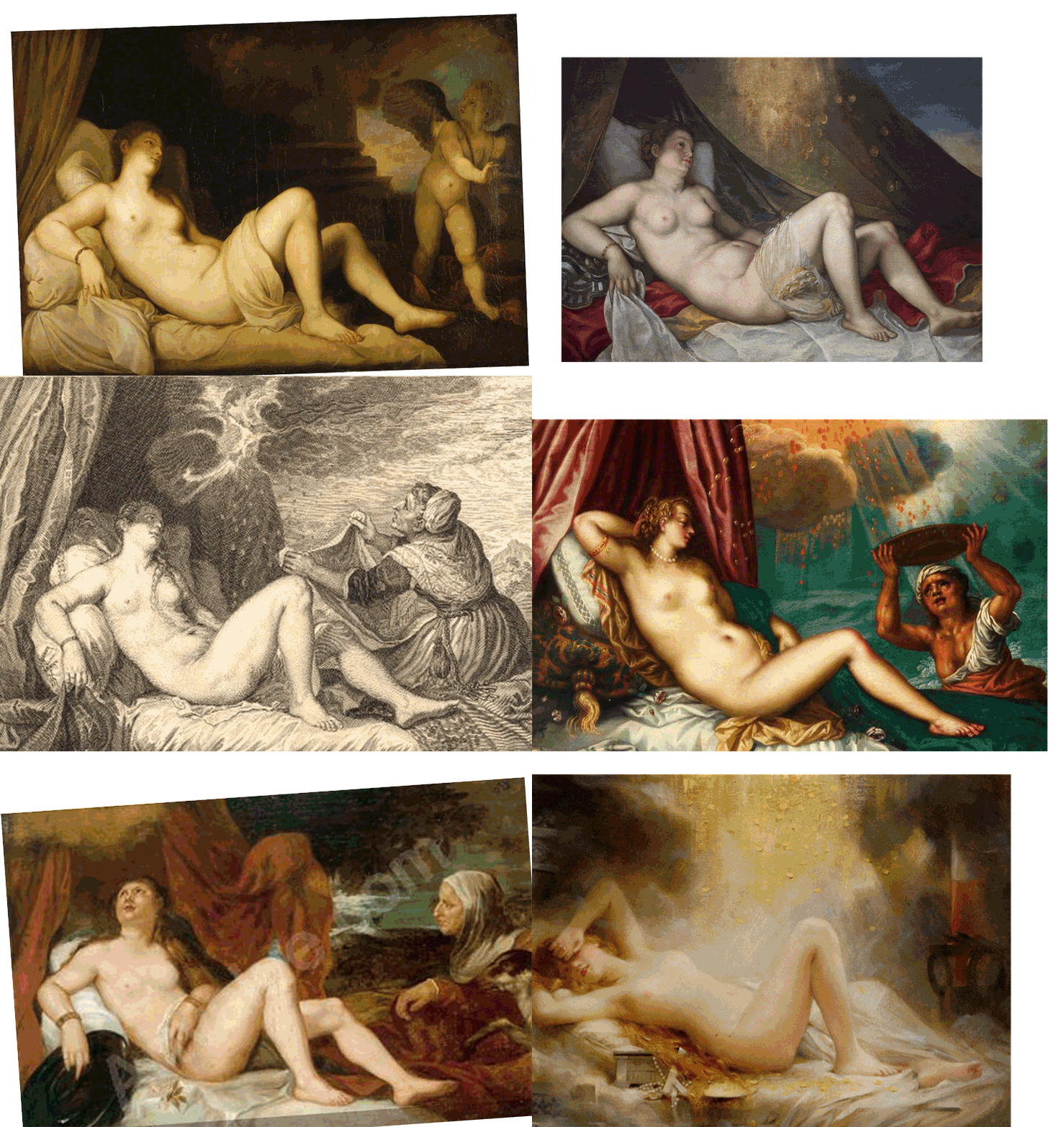
We figure that imagery of this genre will become increasingly mainstream during the golden reign of Emperor Commodus,* when American conservatives take on board the fact that someone important has a thing for water-sports, therefore it must be an acceptable taste -- if not obligatory for everyone -- and collectively retcon their moral judgement to reflect this new-found understanding. We're just getting in before the rush.

Some technical points, to be read out in the Explaining Voice:

1. The version in Oslo (with a weird metallic tent or spaceship cowling instead of bed drapery) is damn near impossible to find through the much-vaunted Gazoogle, apart from an entry on Tripadvisor and a couple of Flickr accounts. It doesn't even feature on the Nasjonalmuseet for Kunst's own website. But the brushwork in my memory is authentic enough -- apart from the "later modifications" -- and details of composition locate it to soon after the 1544 version (in the Capodimonte Museum in Naples**) and its several copies.

2. No-one really seems to rate for the Barker Welfare Foundation's copy either -- currently on loan to the Art Institute of Chicago -- on account of its generally sketchy provenance, but it does have a marginally larger presence on the Interducts. It is relatively unpopulated, apart from the face of Zeus, drooling golden fluids from up in the clouds. The Foundation dates it to "after 1554"... the puppy at lower left might invite comparisons with the doggage in the same place of the 1560s version in the Prado, but Titian liked painting puppies.

I am not sure how the process of connoisseurship works whereby some of the paintings from Titian's workshop receive the imprimatur of being the work of Titian his own self. Perhaps someone counts individual brushstrokes and decides if enough of them are assertive yet graceful enough to be the contribution of the Master. Time was when only four paintings had passed the gatekeepers to enter the Canon, but then in 2013 it was agreed to retrospectively recognise the Wellington Collection's version in Apsley House as a Authentic Work of Unmistakable Genius after two centuries of classifying it as a coarse copy, further ruined by over-painting and insensitive restoration.

3. What's that up at top right in the 2009 Riddled Mithrasmas Advent Calendar? Why yes, "Dec. 22" seems to be another version of Danaë's Golden Shower, located in Archduke Leopold Wilhelm's personal collection, when David Teniers was painting it in 1647-1651 as was the custom of the time.
What happened to that version in later years is a matter for art historians, but a very similar painting changed hands at an art auction in 2006.

4. Yet another early version passed through the hands of Parisian art connoisseur Le Brun some time in the 1770s, when M.-L.-É. Vigée (later Vigée Le Brun) painted a rather fine partial copy. There is talk of a Danaë that changed hands at auction in 2011, and speculation that it might have been Le Brun's version.

Then there are umpteen bootleg copies, and engravings, and reimagined versions by later painters using the same pose. Suffice to say that in the Riddled Amateur Dramatic Society staging of the whole saga, certain parts of each authentic workshop painting will prove to be the work of "LCF", and when all those sections are assembled into a single artwork, they will hold the power to open the Ninth Gate of the Kingdom of Shadows. I am available to play the role of the unscrupulous art dealer.
---------------------------------------------
* B^4 prefers the name "Little-Gloves" for the Imperator, i.e. Caestigula ["caestus" is a 4th-declension noun so (as any fule kno) it takes the diminutive suffix '-igula' or '-icula']. But here at the Riddled Institute for Crap Historical Analogies we rate for Commodus... the disastrous successor to Marcus Aurelius, who devoted his Caesarship to partying, corruption, playing at gladiator, avoiding responsibilities and generally undoing Aurelius' last-ditch attempts to hold the Empire together.

** That version was on loan to the National Gallery in Washington for July-November 2014, so American readers really have no excuse not to have seen it.

Saturday, July 30, 2016

Fun with plagiarism: Floodlands edition


Was N. Molesworth (1953) inspired by Mervyn Peake (1950)?

It would be irresponsible not to speculate.

Saturday, April 16, 2016

Letting the days go by, 365 of them since last ALaJVC Day

And you might ask yourself, How did I get here?
And you might ask yourself, Why am I dressed this way -- in the habit of a Cupatory Nun of the Littoral Dispensation, on the Isle of Varve in the Rhodomontane Reaches? Accompanied by a pair of the tutelary baboons essential to the votive duties of a Cupatory Nun, hoisting the Amphora of Holy Mugwump so that they might drink deep of the salted pineapple juice? And why does that costume appear to be modeled on the usual work clothes of Evangeline van Holsterin when she is barmaiding at the Old Entomologist?

And you might ask yourself, How is it that I address the baboons in this strange manner of speech, an idiom that is at once antic and lapidary and bombastic with braggadocio, as if intoned by Cardinal Bembo in the course of his secret career as a Landesknecht?

And then you remember, as if from a fading memory of a dream, that you allowed yourself to be cajoled and wheedled -- inveigled, even! -- into entering the immersive, multiple-player game that we at Riddled Research Laboratory commissioned from Space-Time Eddie. A game designed to celebrate International Act Like a Jack Vance Character Day,* and to make it easy by rephrasing all the players' interactions into the appropriate style.
And looking down at your avatar, you remember that the game assigns you a persona without offering a choice about the gender... any more than it allows a choice whether to be a mooncalf or a non-pareil. Eddie reckons that all the cool MMORPGs have gone this route of imposing an avatar's appearance, and it has nothing to do with making life easier for the programmers because of female characters in the Jack Vance universe generally having SFA to say.

You won't make that mistake again, will you?

* Don't worry, you still have until April 20 to mentally prepare.
---------------------------------------------------------------
Why is this not a MMORPG yet? In which guilds of crusading Librarians rampage from hexagon to hexagon of the infinite Library? The non-existence of "World of Lorecraft" is deeply disappointing.

Sunday, March 20, 2016

Things that seemed a good idea at the time

1. Giving tigris a copy of the Hawksbill Station Cookbook as birthday prezzie, with all the mouthwatering recipes for grilled, baked, pan-fried trilobite. However, the ensuing picnic-oriented expeditions in the Riddled time machine have brought home the fact that trilobites were wily anthropods, prepared for deception and not easily duped. Also, specialised lures must be designed for fly-fishing in an era long before flies.

So this is the Barbed Banana, that is what she said I call it. Just look at it! Trilobites can't resist it! The drag-&-drop Bad Ronald glasses are optional.

It is important to pack the caper butter with the rest of the pic-a-nic preparations, for certain people insist that a barbeque is simply not acceptable without it, and it is a long round-trip when you are sent from the Precambrian back to the Pleistocene to fetch some.
----------------------------------------------------------
2. Indeed, most ideas seem a good idea when they come up while we are down at the Old Entomologist, quality-controlling the Roggen-Wolfen-Dunkel-Berlinerweissen-Spezial (mit Nachtschatten), and lamenting the poor showing of Hot Needle of Inquiry in the 2.15 at the Tauherenikau Races.

The idea in this case being that horse levitation. With any number of paintings attesting to the bygone anti-gravitational equine capability. Somehow horses lost this ability late in the 19th Century in a simultaneous world-wide mutation.

With the corollary that it behooves us to reverse the change, because weightless horse racing is not against the rules, and what could go wrong?

It was a tight squeeze getting Evangeline van Holsterin's pony "Mr Kraken" into the Evolvamat (it is "an evil tempered beast given to rolling in swamps"). However, the effects were dramatically successful, as shown in this image captured by our surveillance engravers.
The problem remains of navigation, especially with Swearing Bob in the saddle. He is oblivious to the signals we are sending, via old-fashioned candle-and-billiard-cue code -- augmented with the Sherlock Holmes Dancing-Man Cipher -- to veer left before he and Mr Kraken collide with stately Riddled Manor. The library fairies may appear to be making fun of Another Kiwi's expressions but it is only that they think it is a game of Charades and they are signalling "Two syllables, rhymes with Phew".

Fortunately the giant inflatable Bobbitt Worm on the roof of Riddled Manor absorbed the impact, and no lasting damage was done, although Mr Kraken's mood was not improved.

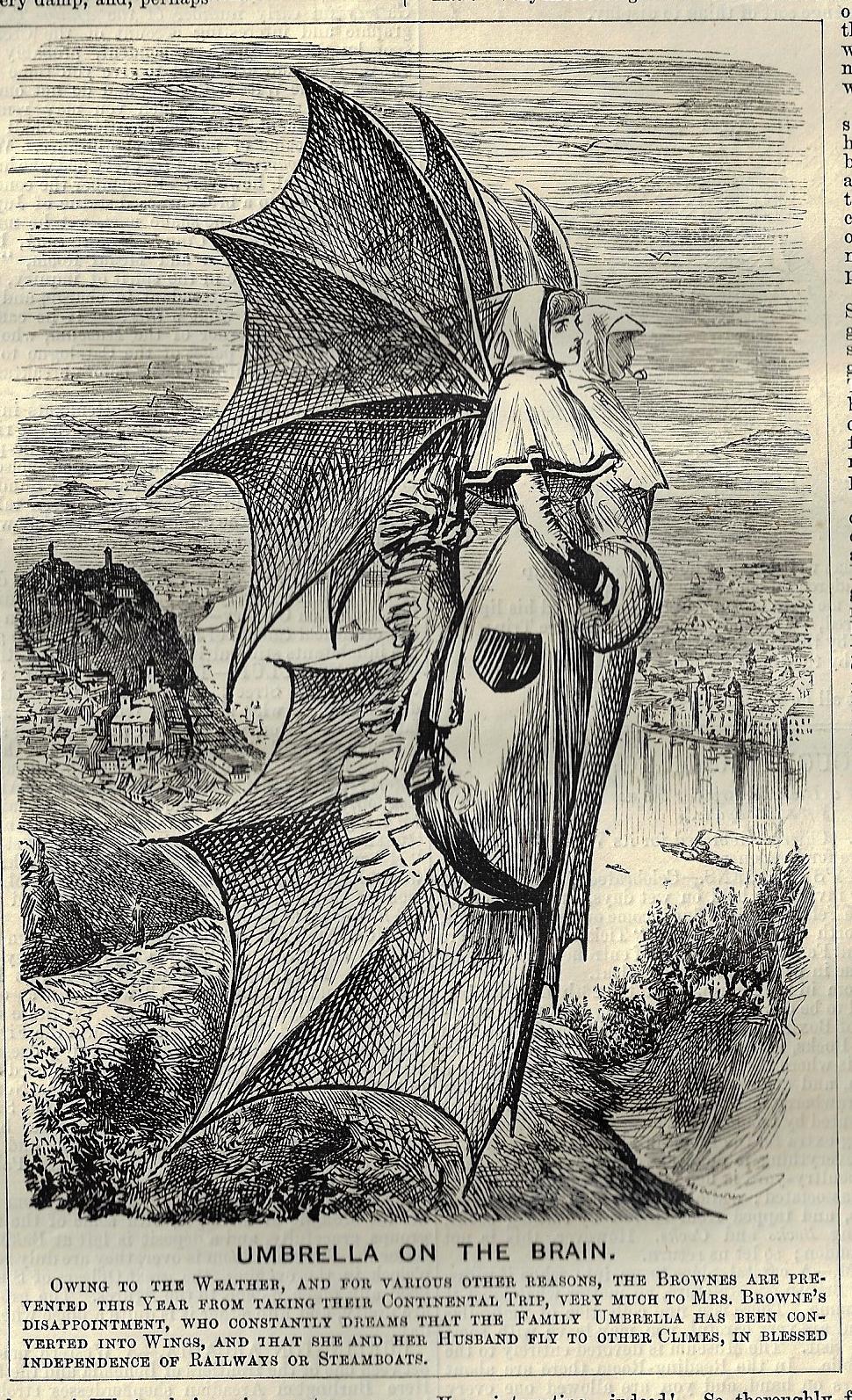
3. The monochrome illustrations in Another Kiwi's guide to judging the ripeness of Orbs were perfectly clear [below, left].
Do they benefit from being colourised [right]? I THINK NOT.